Mississippi in general and Natchez and Vicksburg, MS specifically, drew me to their rich Southern Civil War History. I spent a half day in Natchez and one and a half days in Vicksburg.
Consider for a moment if the United Confederate States had won the war. The Southern border of the United States would be the Confederacy. The United States, as we know it now, would not exist and in her place would be two countries. The USA would be half the country she is today, both geographically and geopolitically. This would not have been good and would have changed the history of the world.
I for one am pleased it turned out the way it did and all the people I spoke to in both Louisiana and Mississipi, today, agree. They are first Americans and second Southerners.
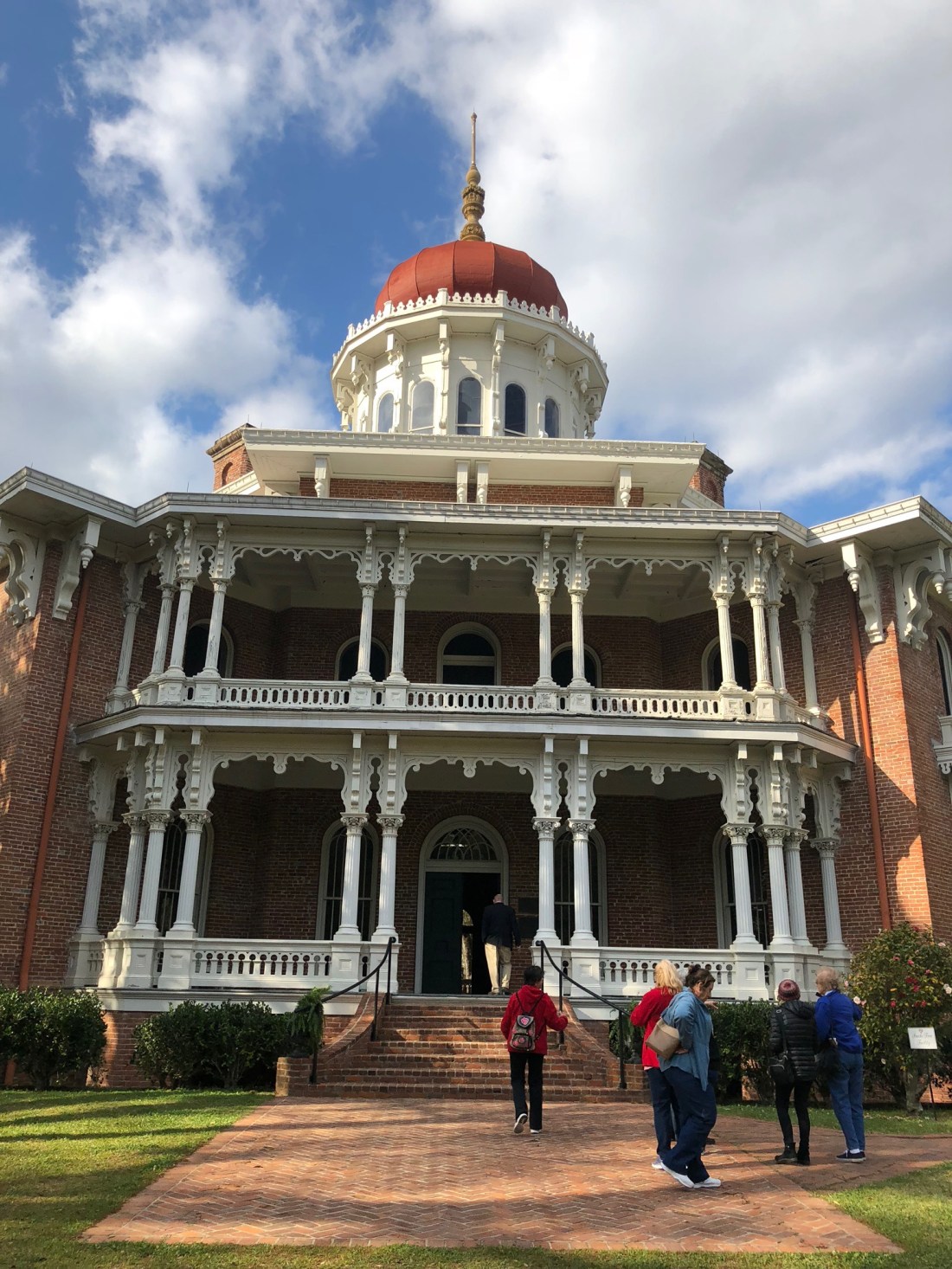
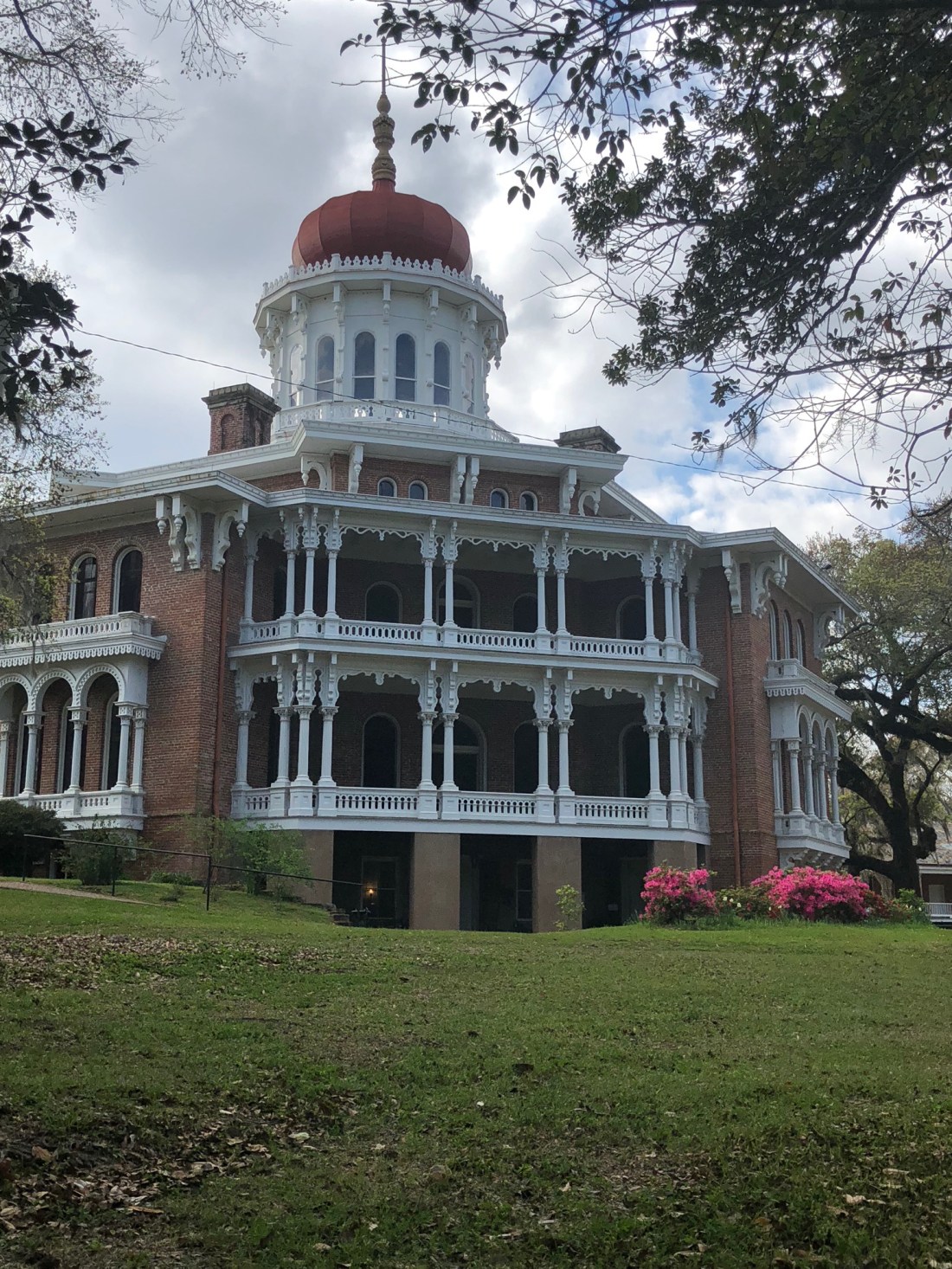
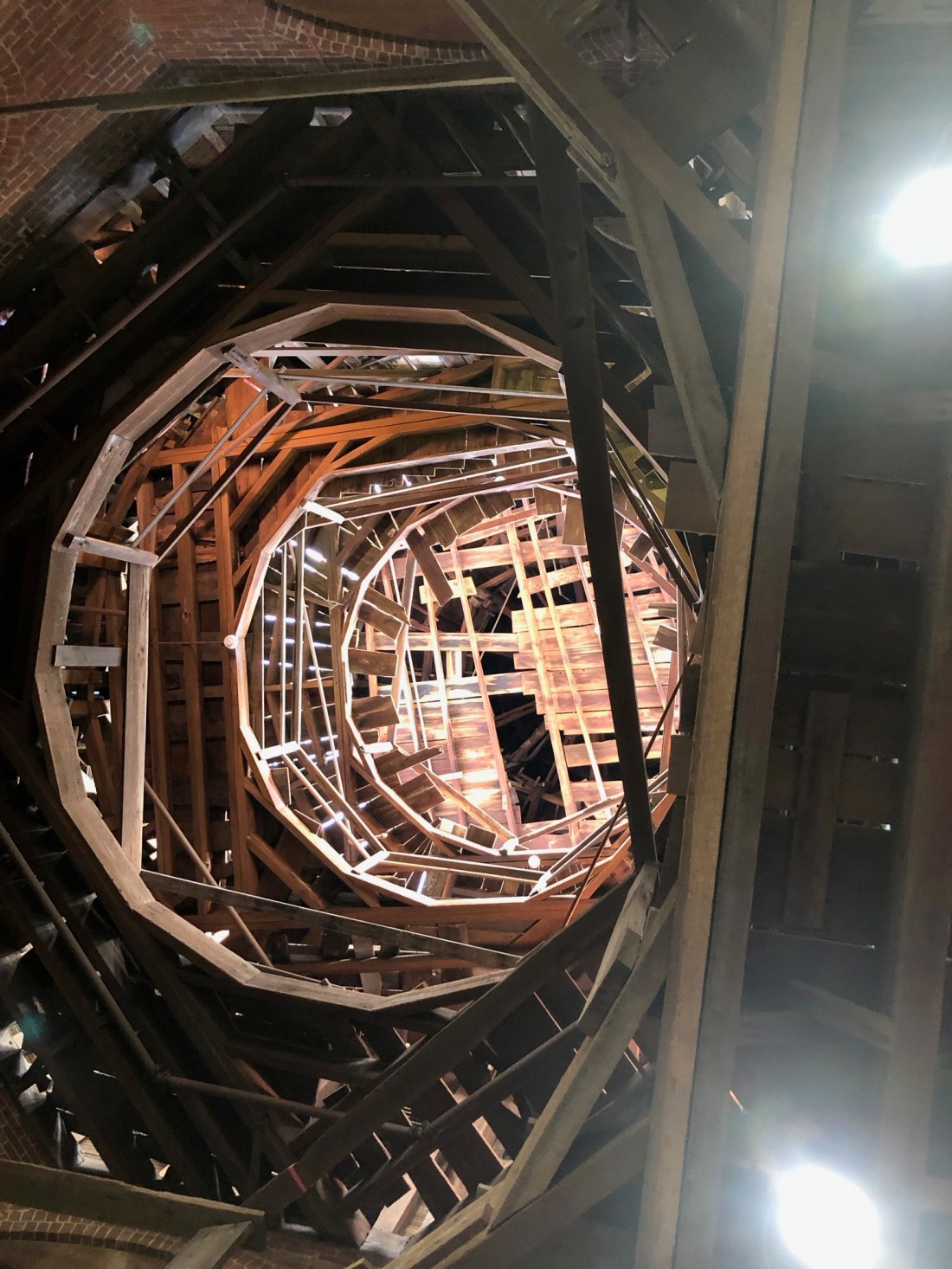
My short visit to Natchez consisted primarily of a visit to Longwood Mansion. Longwood is a fascinating story. Originally planned to be a 40,000 sq ft (yes, 40K) antebellum octogonal home, the project was never completed.
In 1859, cotton planter Dr. Haller Nutt commissioned the building of Longwood. Sixty to seventy-five Amish builders from Pennsylvania were hired to construct this opulent home for his family. The builders completed the entire exterior of Longwood from 1859 to 1861 when the Civil War began. When war broke out, the Pennsylvania builders left, leaving the structure far from completed. Of the thirty-two rooms planned, only nine were completed in the basement. Dr. Nutt died in 1864 and the family, due to the war, was left without the finances to complete the project.
With my completion of the Longwood, Mansion tour, I was off to find an adult beverage which led me to King’s Tavern. The King’s Tavern building was built in 1769, making it the oldest structure in Natchez. Unfortunately, it was closed.


Not to be denied, I found my way “Under the Hill”. Under the Hill refers to the area along the Mississippi River, below the hill that Natchez is built on. And, what would I find there, but the “Under the Hill” Tavern on Silver Steet, where I met my newest, best friend, Dave, a retired Captain in the Natchez Police Force.
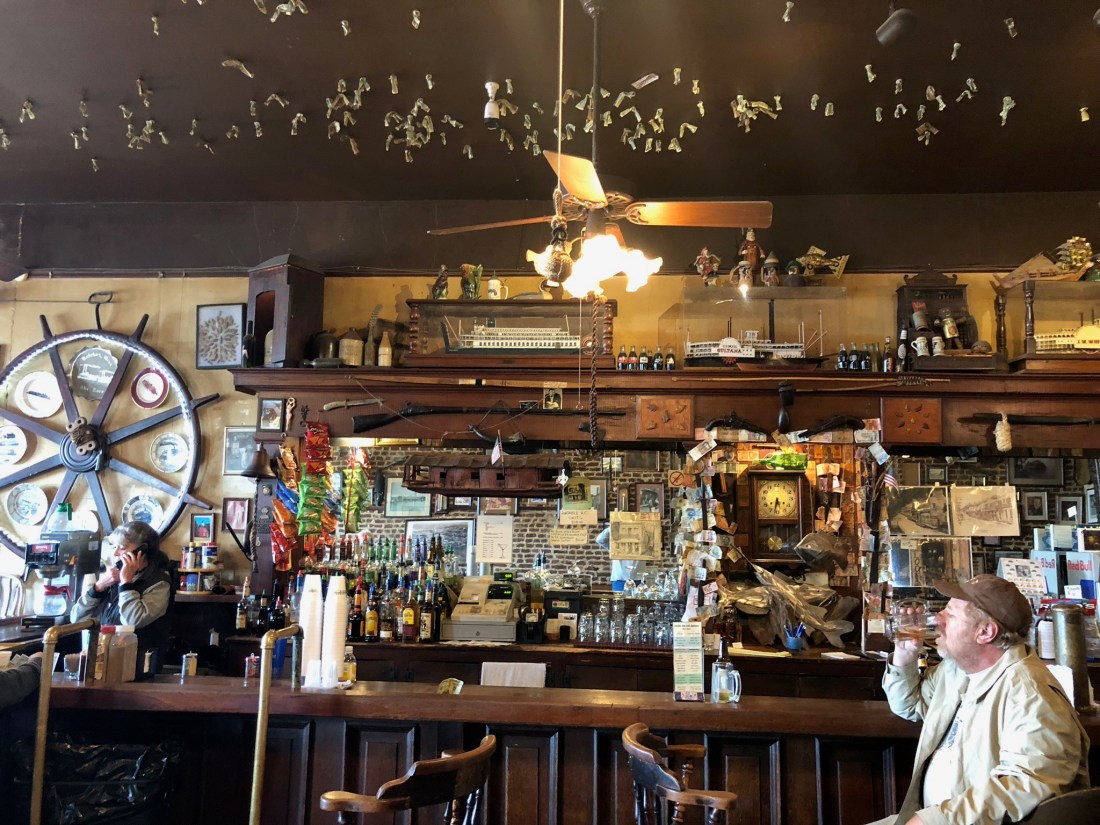


But, the Under the Hill area and Silver Street was not just about the Tavern. It turns out that at one point, prior to 1940’s, Silver Street, where the tavern is today, was not on the banks of the Mississippi, but five blocks back from the water. In the 1940’s, the government decided to change the flow of the river and submerged five blocks of Natchez, and a horse racing track under the river. This was to form two lakes.
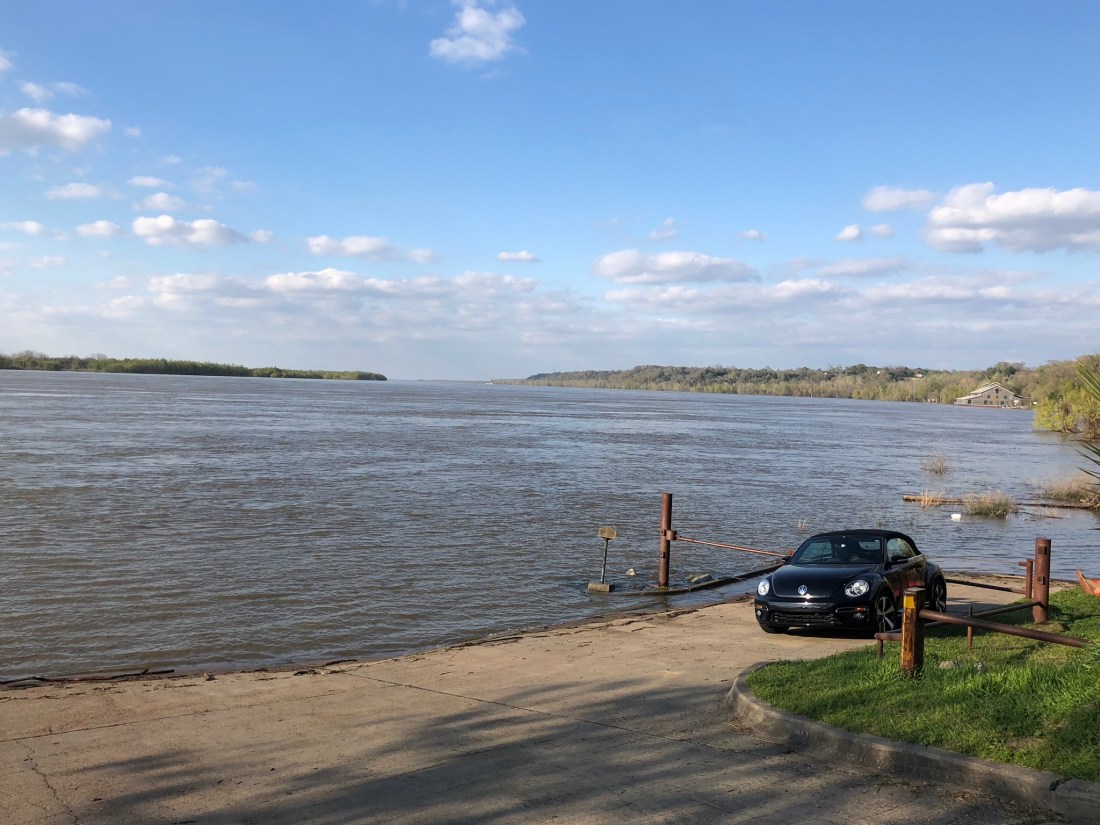
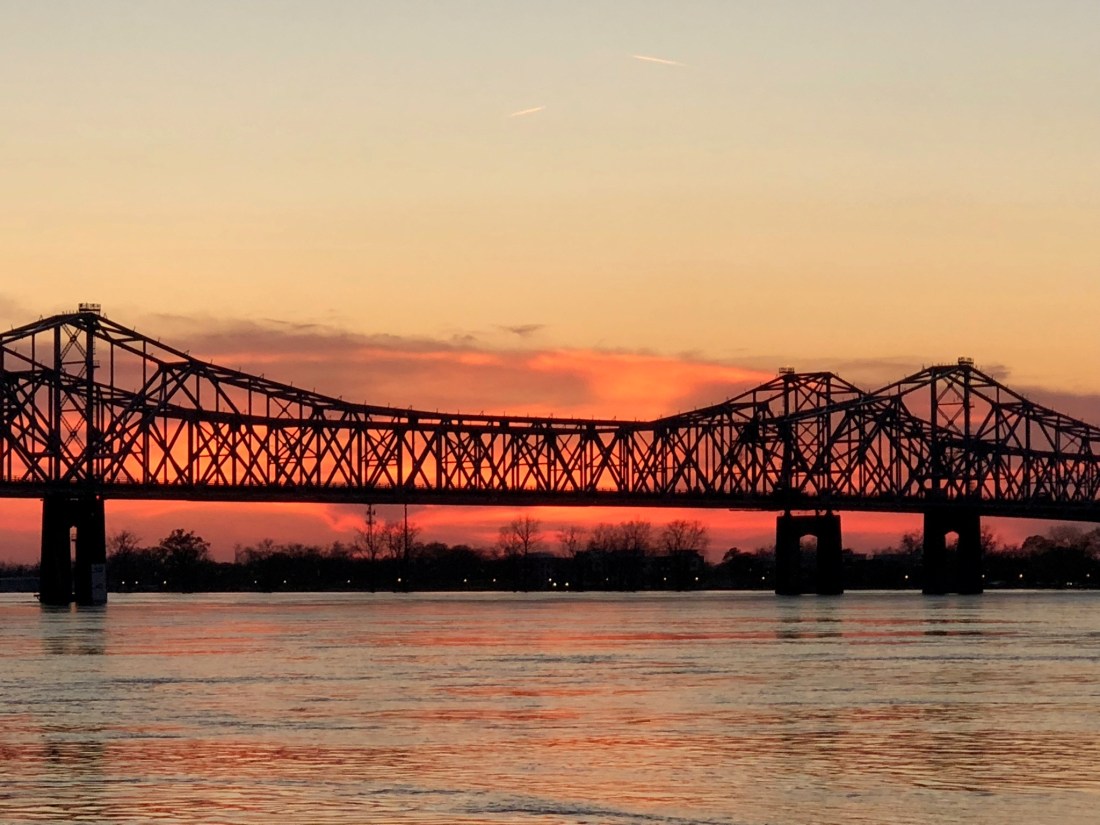
From Natchez, I rode to Vicksburg, much faster than Ulysses S. Grant, on the extraordinary Natchez Trace Parkway. This magnificent National Park Service Parkway has no commercial structures, advertising or trucks. It is pristine.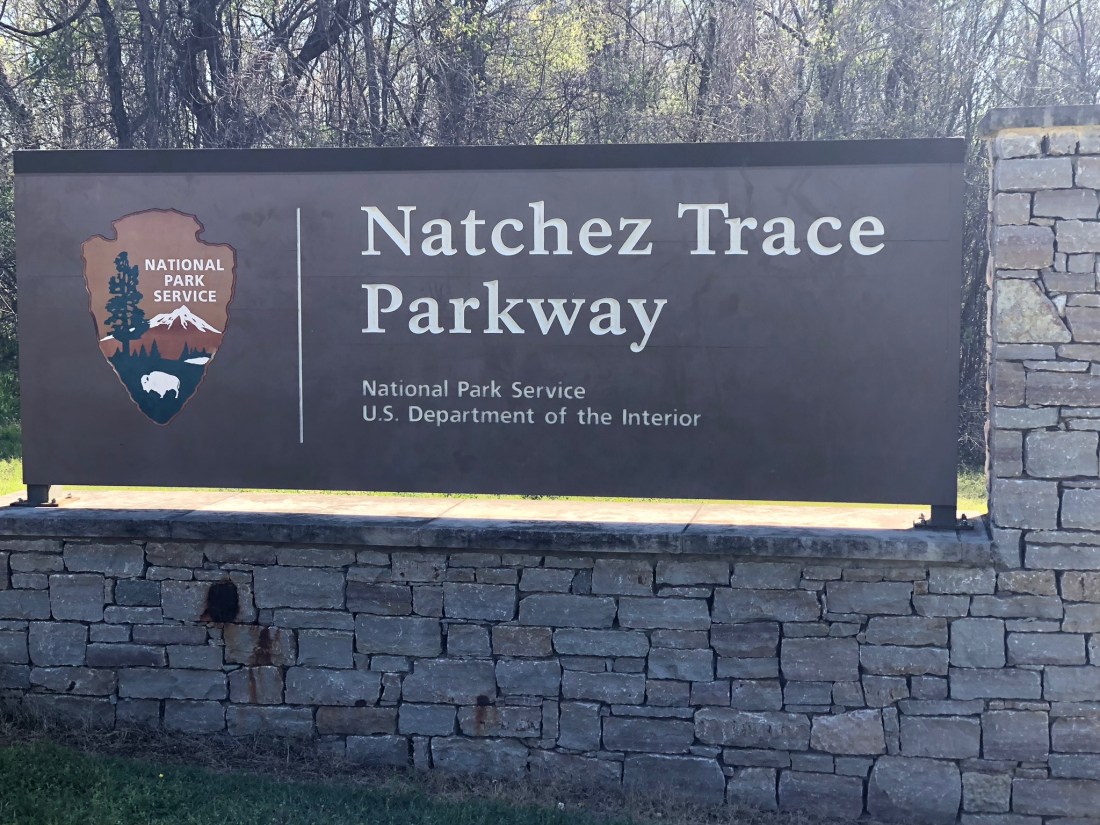
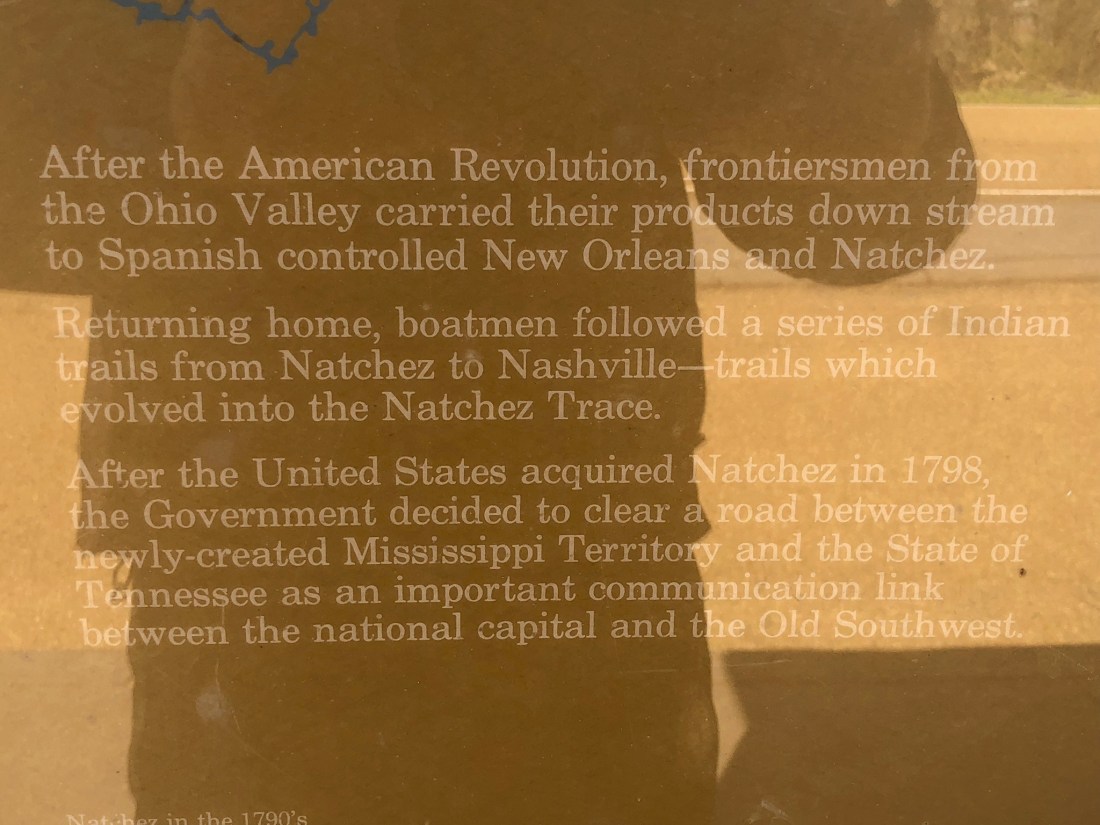

Now, I return to the Civil War.
The most influential battle of the war, in my opinion, was the Battle of Vicksburg (which was more of a siege than a battle). The reason being that Vicksburg allowed the Confederate States to control the Mississippi River. With control of the River, the North could not move troops, ammunition, and commerce from the north to the south which hampered the North’s ability to wage war and hurt the economy. Abraham Lincoln said, “The Key to the war is Vicksburg and we cannot win until that key is in our pocket.”
But before the Siege of Vicksburg could begin, the Northern troops needed to get there. The Confederate army made their stand at a place called Champion Hill, about 45 miles east of Vicksburg, in a battle that became known as the Battle of Champion Hill. This was the most bloody battle of the Vicksburg campaign and possibly the turning point of the war.
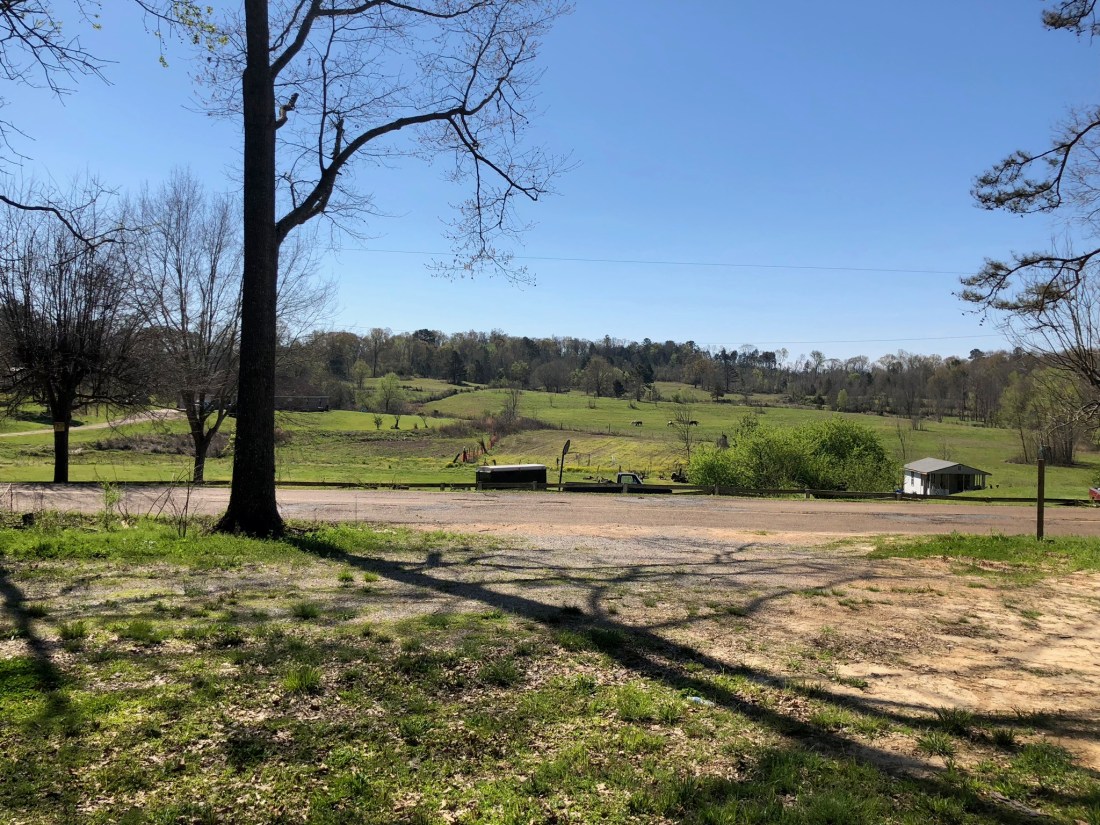
Champion Hill was, and to this day, owned by the Champion Family. I was lucky enough to score a private tour of the Champion Hill battlefield from Sid Champion, the great, great grandson of Sid Champion, the owner of the Champion House site and most of the property where the battle was waged


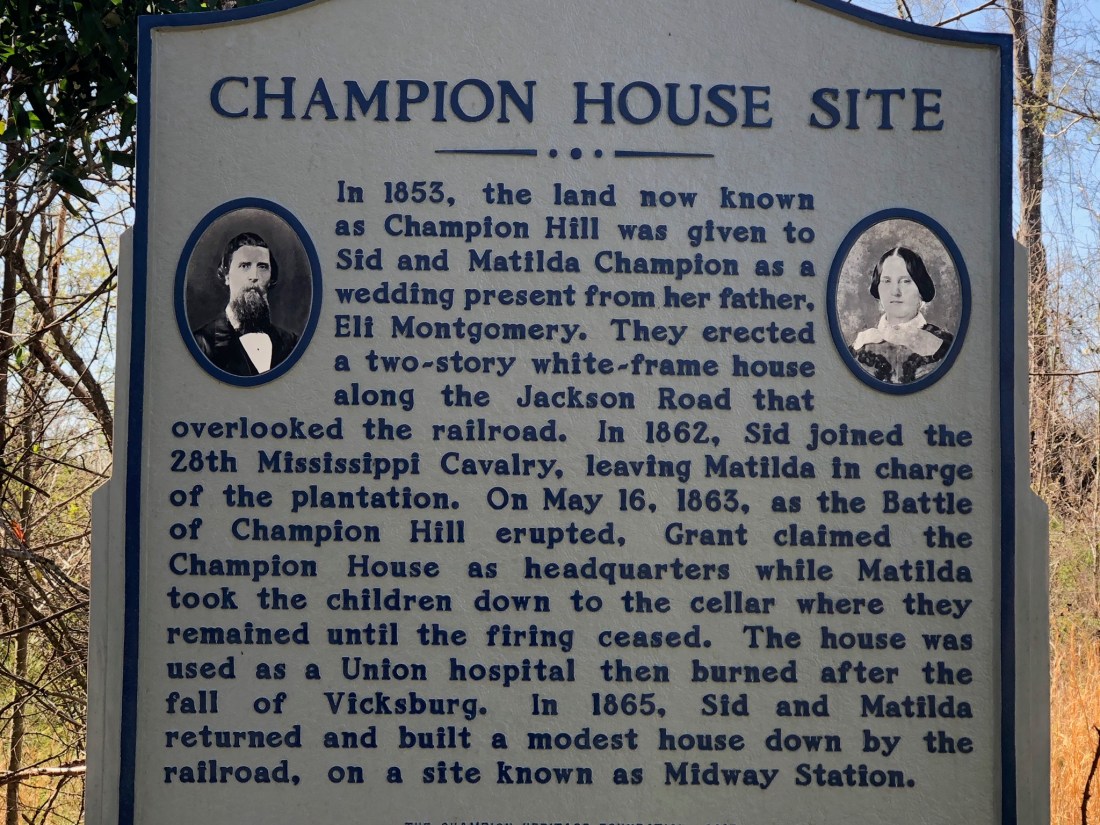
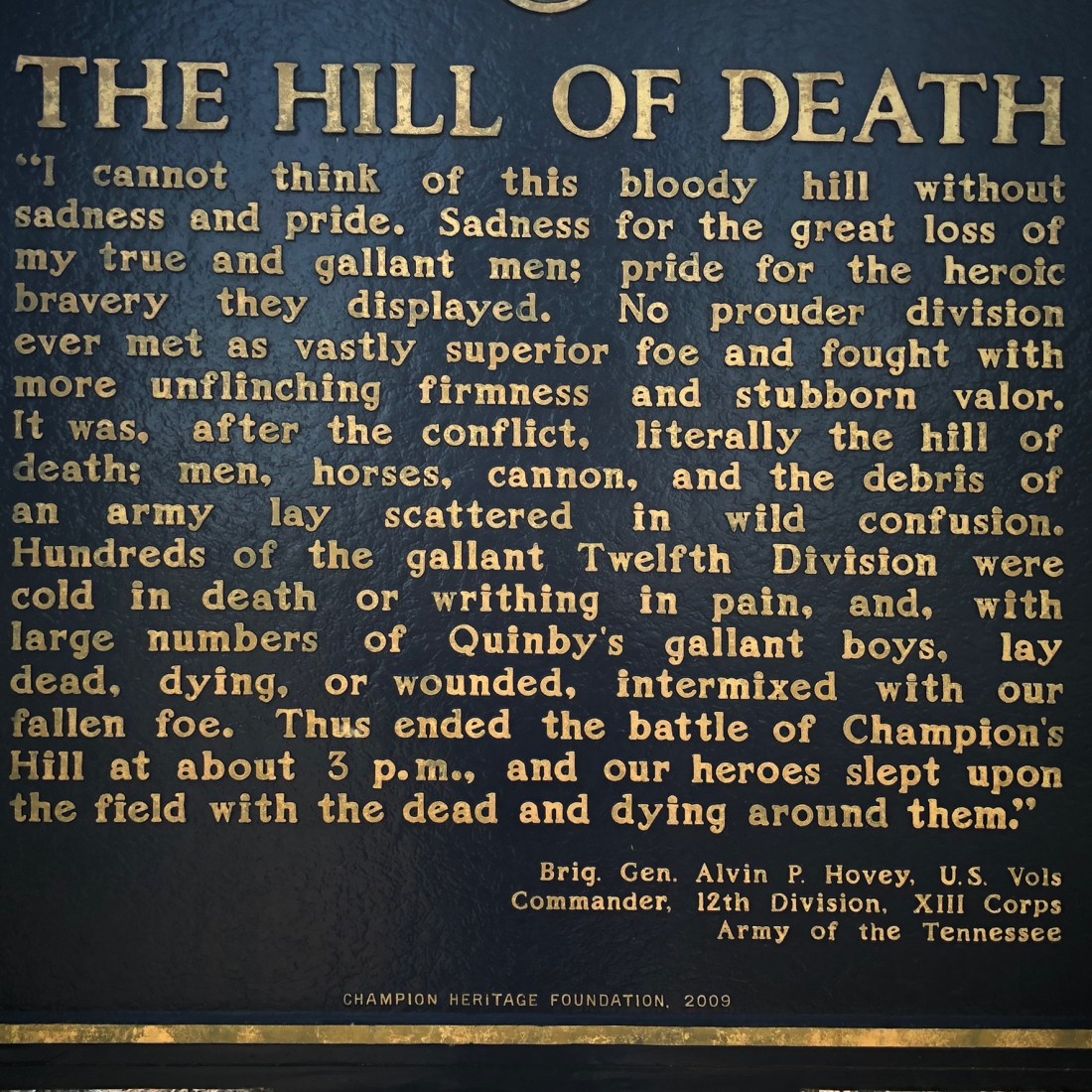
The Federals won the battle and the Confederate Troops barely escaped back to Vicksburg. The Union Army, under General Ulysses S Grant, cut the city off from reinforcements, ammunition, and food for what turned out to be a six-week siege. Facing hunger and starvation for the Confederate troops and the civilians of Vicksburg, the Confederate General, Lt. Gen. John C. Pemberton, surrendered Vicksburg on July 4th, 1863
Following the Battle of Champion Hill tour and a tour of the Vicksburg National Military Park, I visited the County Courthouse Museum where I was enlightened about the South’s embrace of the Civil War and their belief that it should not be forgotten. As Sid informed me, the Civil War today is about “Heritage, not Hate”.
An interesting note is that the President of the Confederacy, Jefferson Davis, never repented his involvement in the war and is celebrated in the Museum with a full room tribute.


In Vicksburg, MS, and I assume the rest of the deep South as well, they celebrate the heritage that is their history. I am not saying whether this is right or wrong, I am just saying that this is the reason that the South defends the Stars and Bars.
One topic that consistently brought out the anger of Dave, Sid, and others I spoke to was the effort today to bury the history by taking down flags and statues that support their heritage. To them, it is not hate, but their history. I had one gentleman explain that “the war was an honorable battle, not to claim what was not theirs, but to defend what they felt was their State rights, much like the Revolutionary War.”
Today, I have a greater understanding of the South’s position and, may I add, a greater respect for their opinion. Not about slavery, of course. And, nobody I spoke to was defending slavery. In fact, the Southern areas that I visited appear to be more integrated and diverse than some areas in the Northeast. Today, in the minds of the people I spoke to, the effort is to maintain the history.
This is the type of dialogue we need to encourage.
Leaving Mississippi and heading for the Gulf Coast of Alabama.
Keep Wheeling!

 Cruising with Kramer
Paul,
I’m learning more than I did in school!
Your trip is amazing to follow!
Be safe
LikeLike
Thanks Dave. It means a lot that you are enjoying if.
LikeLike
looks like you are having a great time!! thanks for sharing!!
LikeLike
It is an outstanding trip – meeting a lot of interesting people and seeing some great sights
LikeLike
Paul, did not know of your interest in the Civil War. Since retirement it has become a passion of mine, primarily the Virginia, Maryland and Pennsylvania battlefields. I would agree with you on the importance of Grant’s siege of Vicksburg. However, the combined Union victorious of July 3 (Gettysburg) and July 4 (Vicksburg) where critical in stemming the pressure of the Copperheads, the north’s anti-war movement and Lee’s invincibility. After the embarrassments of McDowell, McClellan, Burnside and Hooker — these two days in July 1863 were monumental. Enjoyed this post immensely!
LikeLike
Tom, meeting Sid Champion was really fascinating. Getting what felt like a 1st person overview of the Battle of Champion Hill. Happy you are enjoying the blogs.
LikeLike
The posts are wonderful, Paul. looks like you really enjoyed yourself on this particular stop. Looking forward to more stories when you are back in Yankee Land.
LikeLike