That is how I describe my yesterday – Dam Hot.
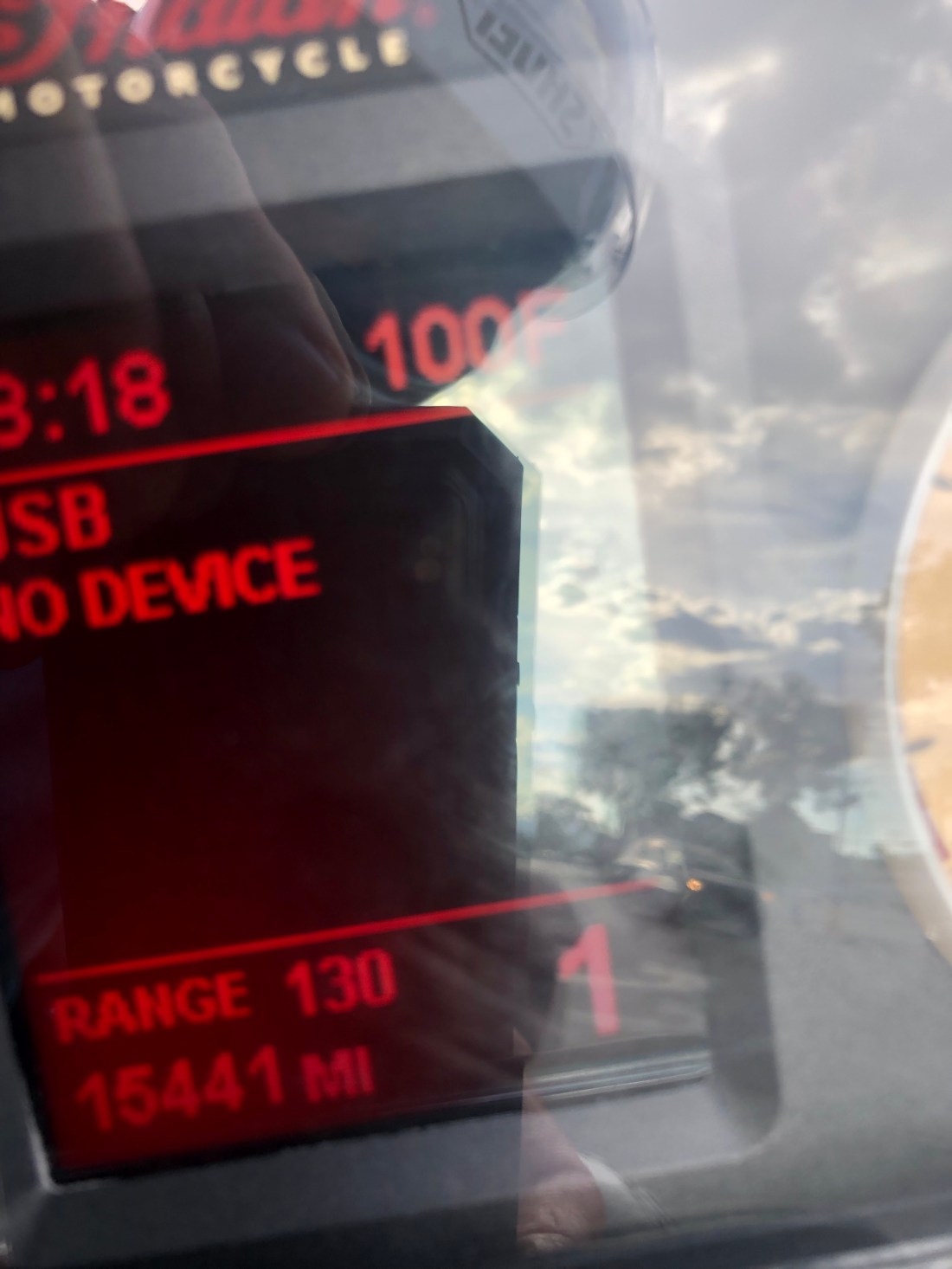
It was over 100º as I visited Lake Mead and Hoover Dam. Hoover Dam was hot as well – as in “incredibly” impressive.

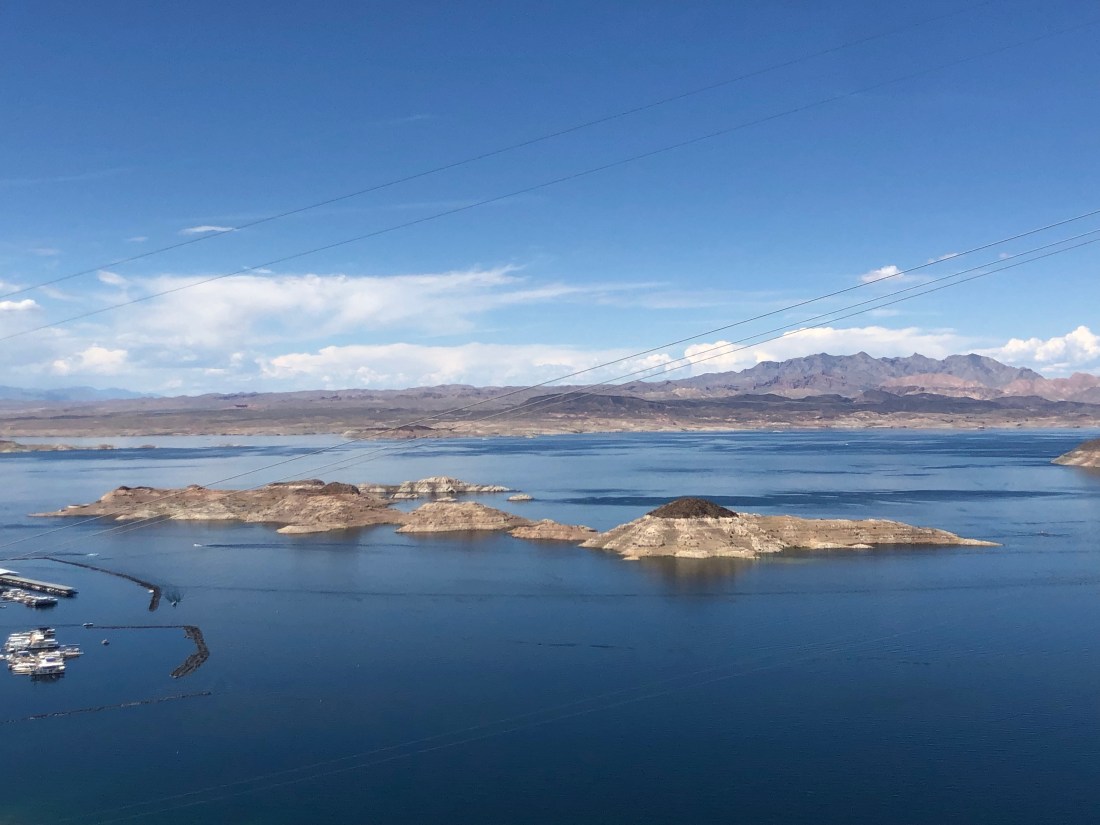
Lake Mead is a man-made lake that lies on the Colorado River, about 24 mi (39 km) from Las Vegas, in the states of Nevada and Arizona. Formed by the Hoover Dam on September 30, 1935, the reservoir serves water to the states of Arizona, California, and Nevada, as well as some of Mexico, providing sustenance (water and electricity) to nearly 20 million people and large areas of farmland.
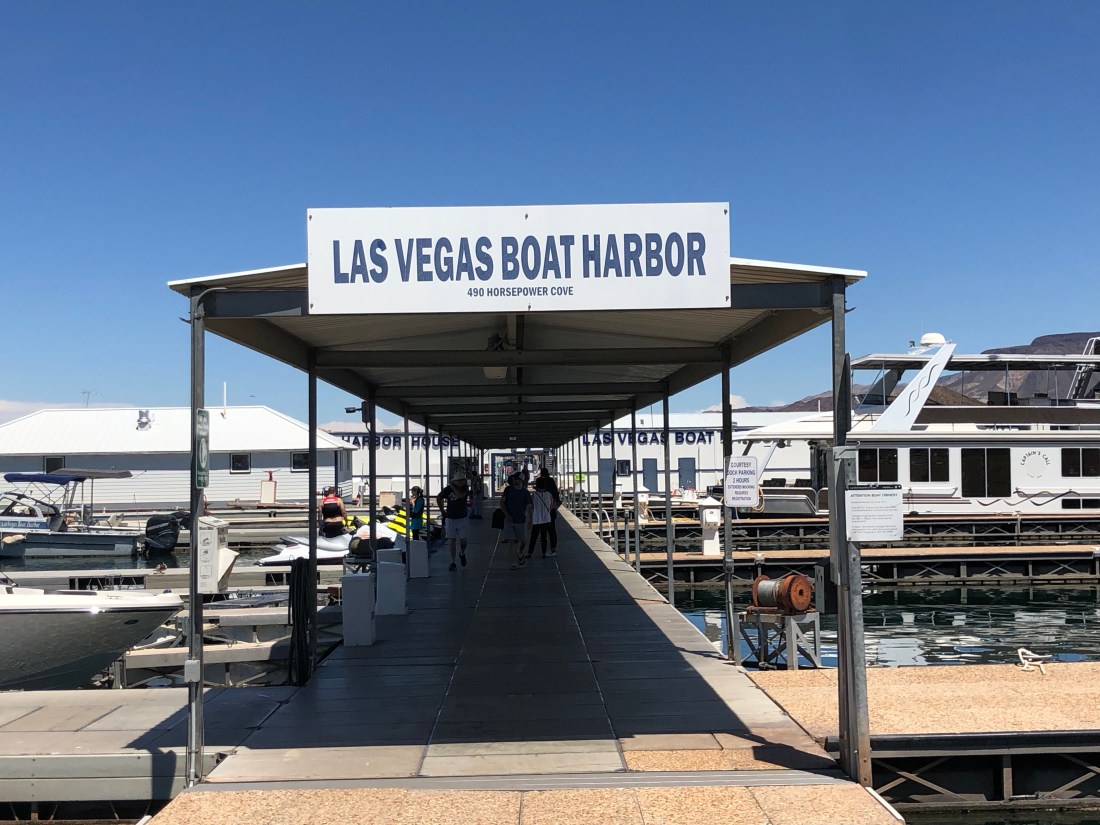


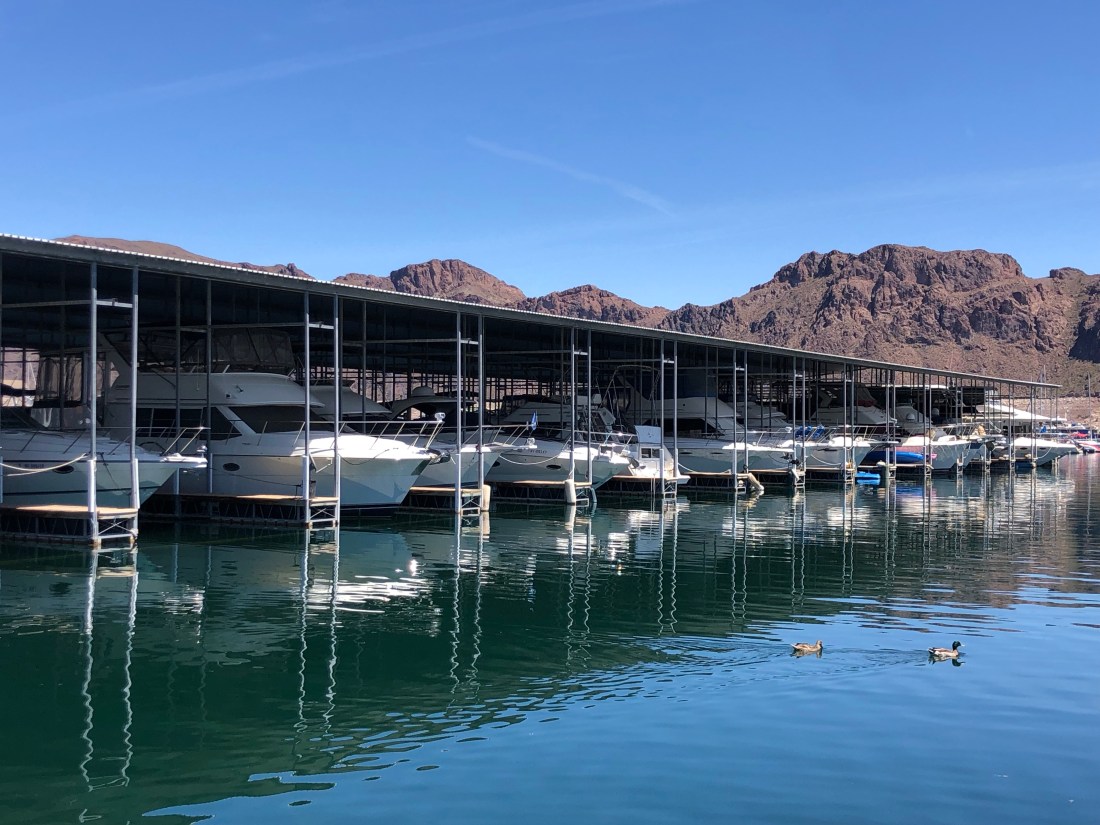
Lake Mead does have birds that look a lot like Seagulls – A little skinnier than East Coast.
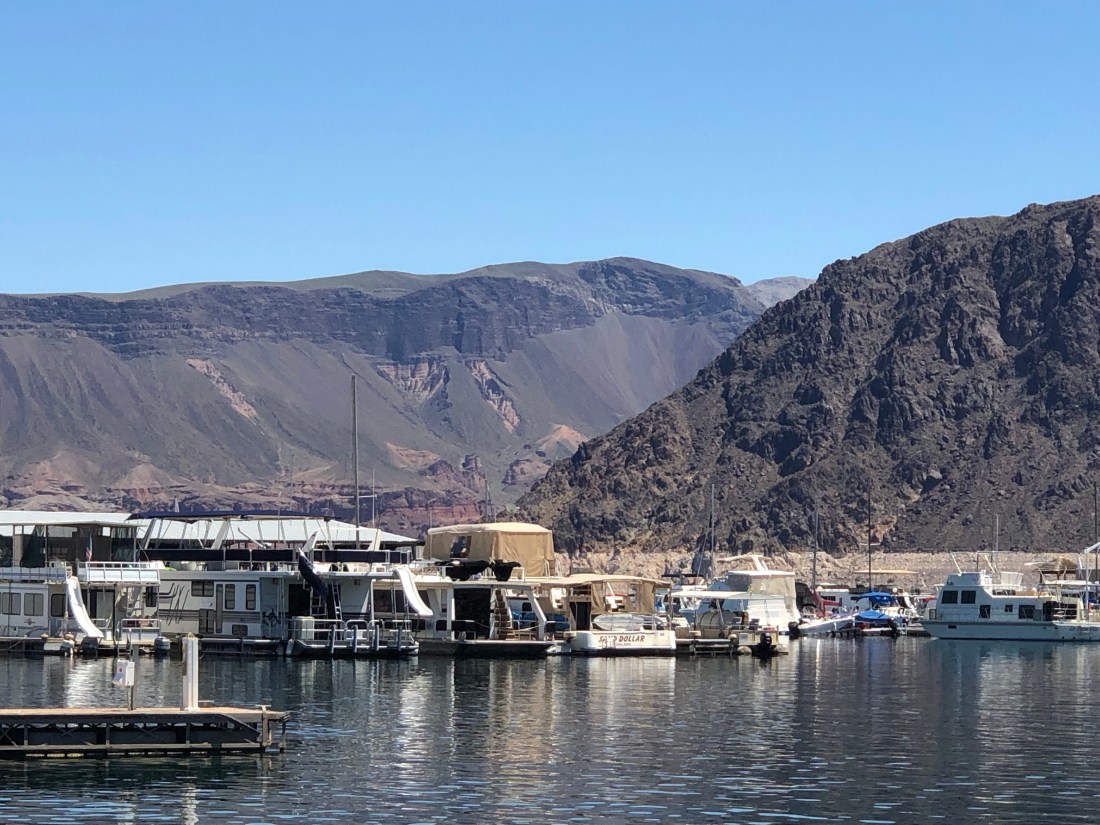

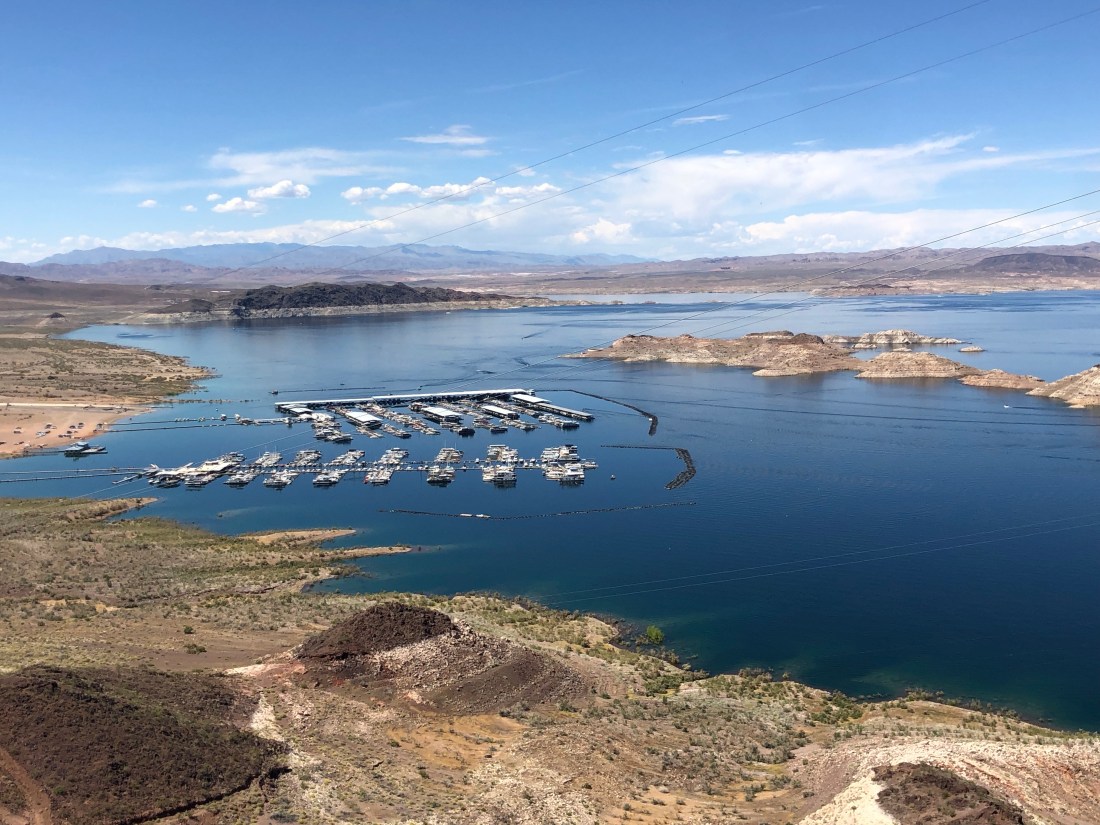
There is a great deal of concern regarding Lake Mead’s water level and its ability to continue to serve the over 20 Million people who count on it for water and electricity. Changing rainfall patterns, climate variability, high levels of evaporation, reduced snowmelt runoff, and current water use patterns are putting pressure on water management resources at Lake Mead as the population relying on it for water, and the Hoover Dam for electricity, continues to increase.
As a nation, this will become a major focus over the next few years as the lake is so critical to the western states and the country as a whole.
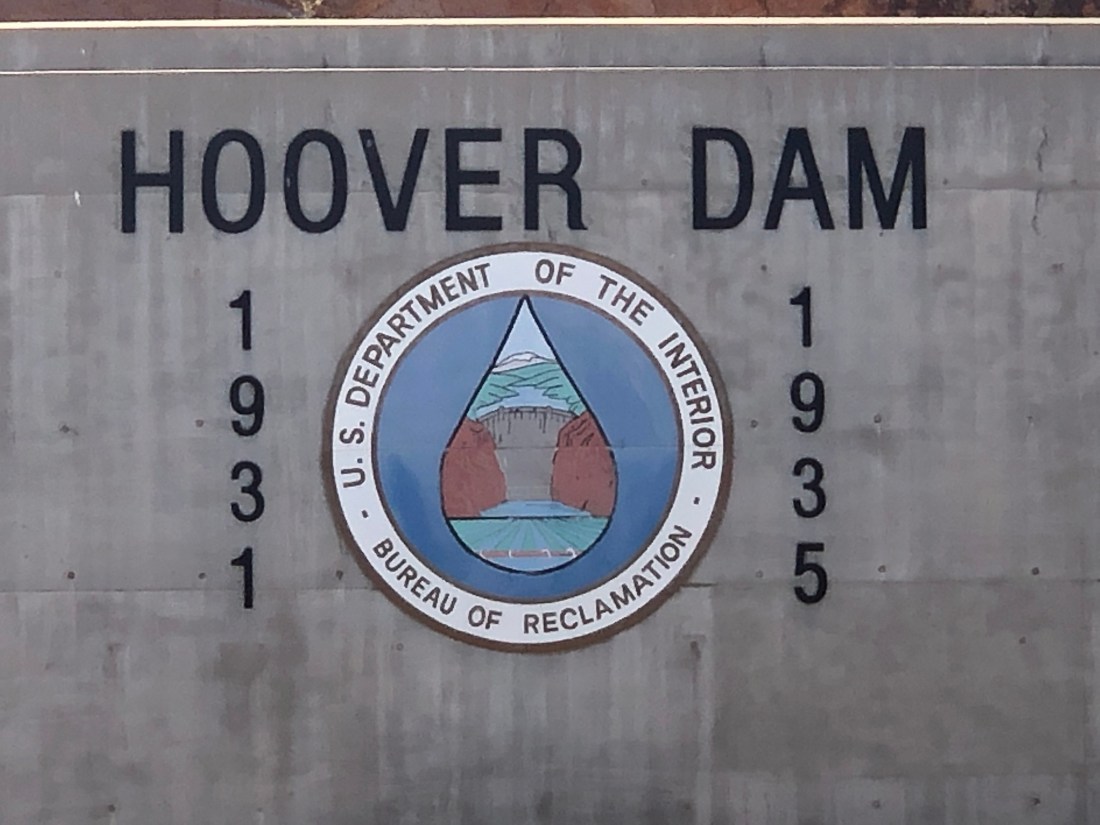
Hoover Dam was constructed in just five years, between 1931 and 1936, during the Great Depression and was dedicated on September 30, 1935, by President Franklin D. Roosevelt.
Its construction was the result of a massive effort involving thousands of workers and cost over one hundred lives. Originally known as Boulder Dam from 1933, it was officially renamed Hoover Dam, for President Herbert Hoover, by a joint resolution of Congress in 1947.
A total of 3,250,000 cubic yards (2,480,000 cubic meters) of concrete was used in the dam before concrete pouring ceased on May 29, 1935. Overall, there is enough concrete in the dam to pave a two-lane highway from San Francisco to New York. Hoover Dam is 726 ft. tall. That is 171 ft. taller than the Washington Monument in Washington D.C. At its base, Hoover Dam is as thick (660 ft.) as two football fields measured end-to-end.
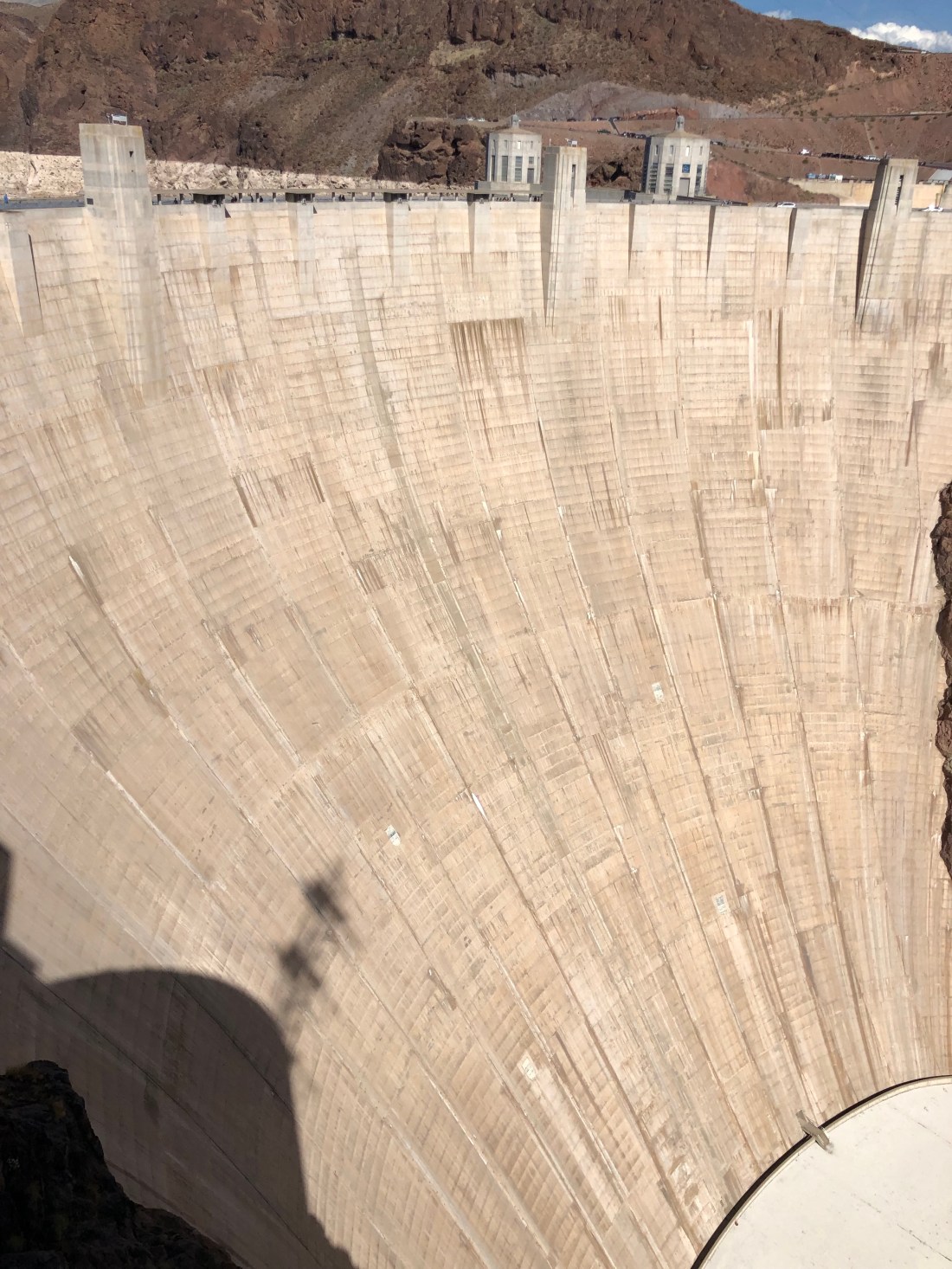

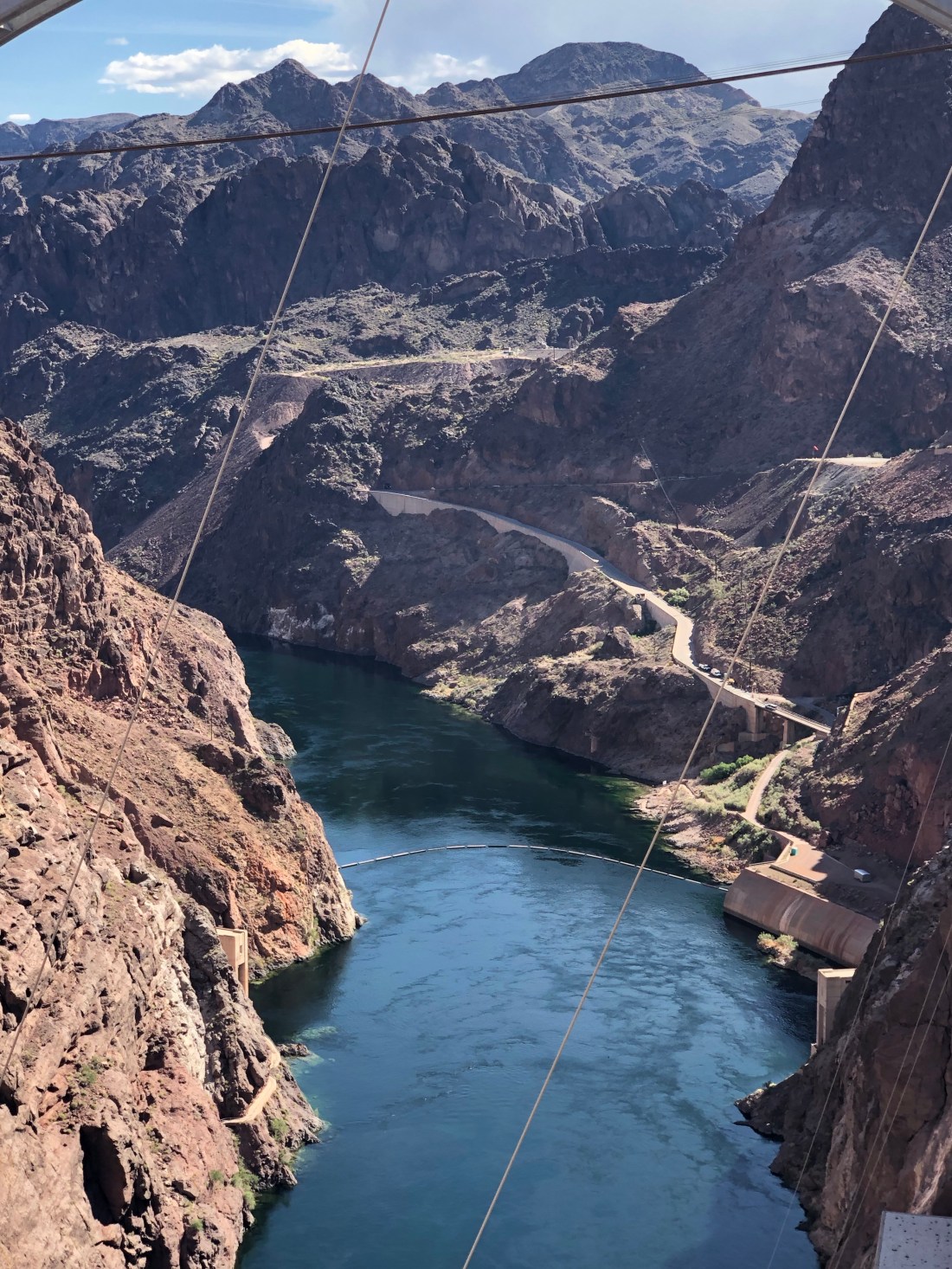
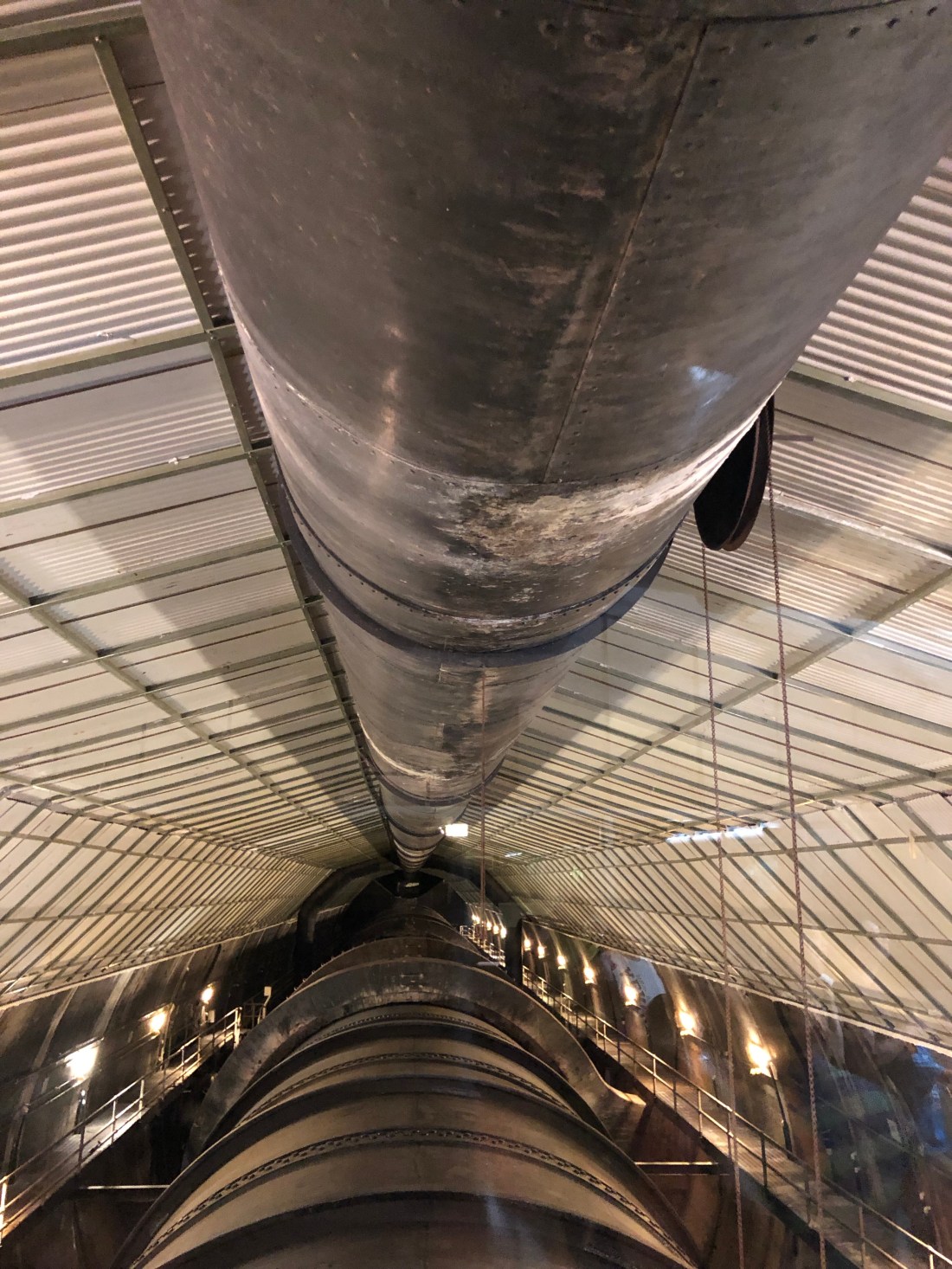
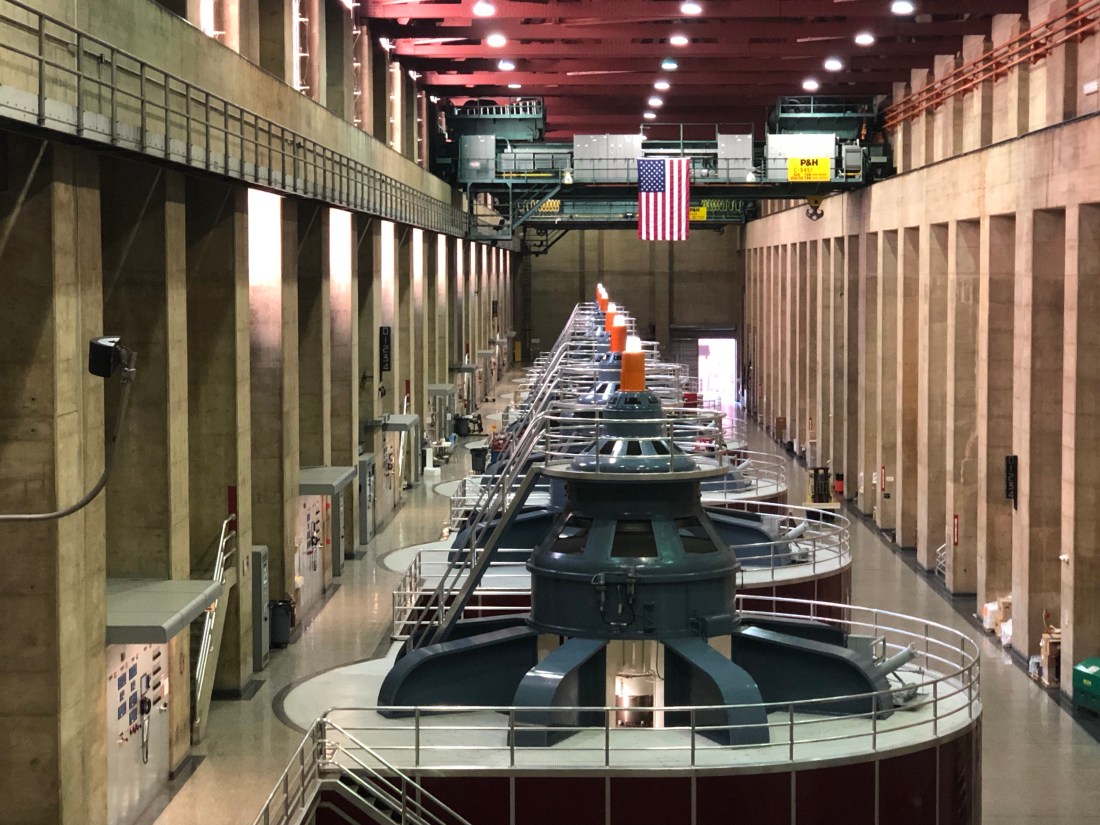
I took a tour of the Dam with focus on her power plant and tunnels. Before the dam could be built, the Colorado River needed to be diverted away from the construction site. To accomplish this, four diversion tunnels were driven through the canyon walls, two on the Nevada side and two on the Arizona side

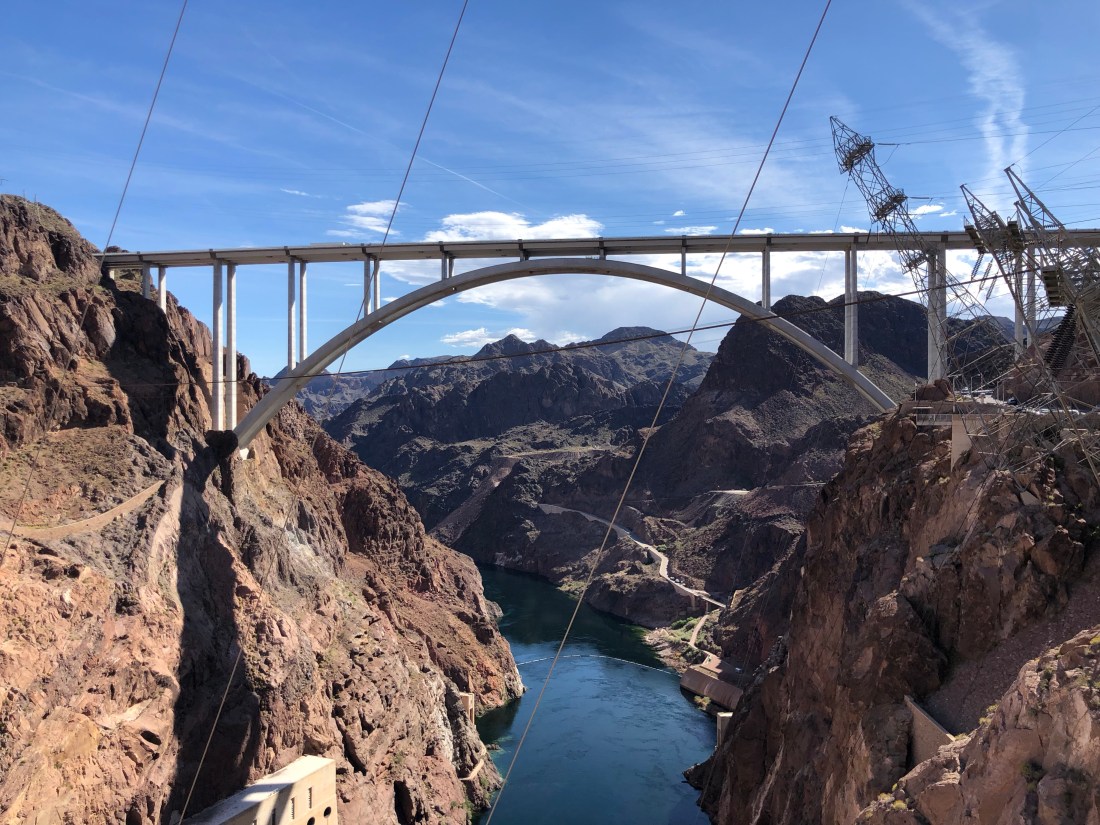
The traffic crossing the Hoover Dam had become so intense that another bridge needed to be built to ease the congestion. The newly-completed Mike O’Callaghan-Pat Tillman Memorial Bridge is the world’s tallest concrete arch bridge, it is the first concrete-steel arch composite bridge in the United States and towers 880 feet over the Hoover Dam.
The 1,905-foot-long bridge connects both Nevada and Arizona roadways, so it’s fitting that it’s named the Mike O’Callaghan-Pat Tillman Memorial Bridge, as it honors a hero from each state. With 30,000 cubic yards of concrete and 16 million pounds of steel, the massive engineered wonder is the widest of its kind in the Western Hemisphere. The bridge was opened, October 16, 2010 (to pedestrians); October 19, 2010 (regular traffic).
The Hoover Dam was a great engineering accomplishment…..a tribute to America’s ability to design and execute a monumental project during the Great Depression. The construction of the Dam was in the 1930s what reaching the moon was in the 1960s. It was a project that united the country and brought tremendous pride in America’s ability to tame the wild Colorado River.
It will take another great American effort to save Lake Mead and the Hoover Dam. Because without American ingenuity, Lake Mead and the Hoover Dam will not be able to supply our Western states with the water and electricity necessary to not only survive but to thrive.
I’m betting on us. Tomorrow I am off to explore what is known as the Mother Road, The Main Street of America or The Will Rogers Highway. Route 66 from Needles, CA to Seligman, AZ.
Keep Welling!

 Cruising with Kramer